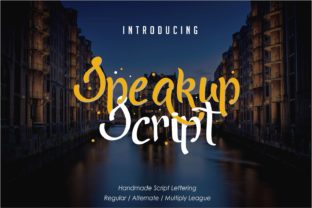
Speakup Script: A Handwritten Font with Real Personality
There's a moment in every design project when you realize the typography isn't just supporting the message—it is the message. I've been there countless times, staring at a layout that feels technically correct but emotionally flat. That's exactly why finding a typeface like Speakup Script matters. It's not another generic script font sitting quietly in your library. This is a handwritten typeface with genuine presence, the kind that makes people pause mid-scroll and actually pay attention to what you've created.
What Makes Speakup Script Stand Out
At first glance, Speakup Script reads as confident and expressive. The letterforms carry a natural hand-drawn quality without looking messy or amateurish. There's a rhythm to the strokes—some letters lean slightly, others flow with an unexpected curve—and that inconsistency is precisely what gives the font its authentic charm. It doesn't feel like a computer trying to mimic handwriting. It feels like someone actually sat down and wrote something they cared about.
The weight sits comfortably in a medium-bold range, which means it holds its own at larger sizes without disappearing into the background. The connections between letters feel organic rather than mechanical, and the overall x-height provides enough presence for headlines and display use. If you've worked with script fonts before, you know how rare it is to find one that balances personality with legibility. Speakup Script pulls that off.
Where This Font Truly Shines
I've seen Speakup Script work beautifully across a surprisingly wide range of applications. In logo design, it brings warmth and approachability to brands that want to feel personal rather than corporate. A bakery, a boutique consultancy, a creative studio, a lifestyle blog—any project where the human element matters can benefit from this kind of handwritten font.
For packaging design, especially in artisan food, cosmetics, or handmade goods, Speakup Script adds that crafted, small-batch feeling customers respond to. It signals authenticity without trying too hard. Pair it with a clean sans serif font for product descriptions and you've got a visual system that feels both elevated and approachable.
In editorial design, think pull quotes, chapter headings, or feature article titles. The font draws the eye naturally and creates a visual hierarchy that guides readers through the page. I've also seen it used effectively in social media graphics, particularly for Instagram stories, quote cards, and promotional posts where you need something that stops the scroll.
On the web design side, Speakup Script works well for hero sections, call-to-action headlines, and landing page banners. The key is using it strategically—large enough to read comfortably, with enough surrounding white space to let the letterforms breathe. It's a display font at heart, so setting body copy in it would be a mistake. Save it for moments that need impact.
How Typography Shapes Perception
Here's something many people overlook: the fonts you choose directly influence how your audience perceives your brand. A premium font like Speakup Script communicates care, creativity, and attention to detail. When someone encounters your website, your packaging, or your marketing materials, the typography is doing subconscious work. It's telling them whether you're serious about your craft, whether you understand your audience, and whether they should trust you.
Consistency plays a massive role here. When you select a typeface and use it consistently across your brand identity—from business cards to email headers to social profiles—you build recognition. People start associating that visual style with your business. Speakup Script has enough personality to be memorable without being so distinctive that it limits your flexibility. That's a difficult balance, and it's what separates a good creative font from a gimmicky one.
Visual hierarchy matters too. A handwritten display font like Speakup Script naturally commands attention at the top of a design, creating a clear entry point for the viewer's eye. Below it, a steady serif font or sans serif font can handle the supporting text. This layering of typographic voices keeps layouts dynamic and readable, which is something every designer, marketer, and content creator should think about.
Practical Tips for Using Speakup Script
Before committing to any commercial font, test it in context. Don't just type your brand name into a preview tool and call it done. Drop Speakup Script into an actual layout. See how it looks at the sizes you'll actually use. Check the spacing. Look at it on a phone screen and on a printed sheet. Typography behaves differently across media, and what looks gorgeous in a font specimen might need adjustment in a real project.
Font pairing is where many designers either elevate their work or stumble. Speakup Script pairs well with geometric sans serifs—think clean, structured letterforms that contrast its organic flow. It also sits nicely alongside a transitional serif font for projects that need a more refined, editorial feel. Avoid pairing it with other expressive or decorative fonts. The goal is contrast, not competition.
Check what's included with the font family before purchasing. Some design assets come with alternate characters, ligatures, or stylistic sets that expand your creative options significantly. Understanding what's available helps you get full value from the investment and prevents you from overlooking features that could solve a design problem down the road.
Readability should always be a priority, even with a script font. Test your headlines at arm's length. If any letter combinations blur together or become ambiguous, adjust your tracking, size, or word choice. The best typography decisions are the ones your audience never notices—they just feel the result.
Finally, review the licensing terms carefully. If you're using Speakup Script for client work, merchandise, or digital products, make sure the license covers your intended use. Most reputable font foundries offer clear commercial font licensing, and it's worth understanding the terms upfront rather than dealing with issues later.
Bringing It All Together
Every project has its own voice, and finding the right typeface is part of discovering what that voice sounds like. Speakup Script isn't the answer for every situation—no font is. But for projects that need warmth, personality, and a distinctly human touch, it's a strong choice. Whether you're building a brand identity from scratch, refreshing your packaging design, creating social media graphics that actually connect, or designing an editorial layout that people want to read, having a font like this in your toolkit gives you options.
The best design work happens when the tools disappear and the message takes over. A font with genuine character—like Speakup Script—gets you closer to that point. It gives your words a voice before anyone reads them, and that kind of modern typography advantage is worth investing in.