Carrot Script: The Playful Handwritten Font for Creative Projects
There's a particular kind of warmth that only a handwritten font can bring to a design. It feels personal, immediate, and full of character. In a digital world saturated with clean, geometric sans serifs and classic serifs, a typeface like Carrot Script offers a welcome change of pace. It’s not trying to be overly formal or austere; instead, it leans into a friendly, approachable aesthetic that can make any project feel more inviting. But what exactly defines this font, and where does it truly shine?
Understanding the Visual Personality of Carrot Script
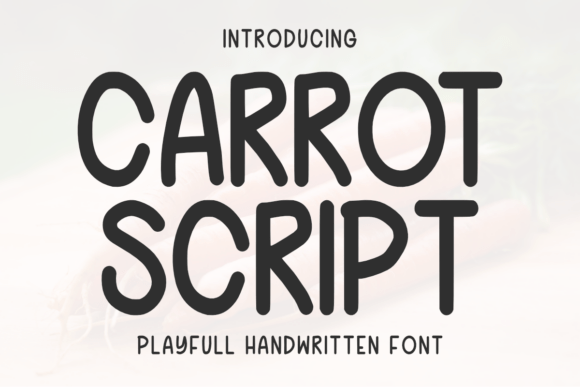
At its core, Carrot Script is a script font designed to emulate natural, playful handwriting. Its visual characteristics are defined by smooth, connected letterforms with a slight bounce and a casual rhythm. The strokes have a consistent, medium weight, avoiding extreme thinness or heavy boldness, which contributes to its legibility and friendly demeanor. Unlike formal calligraphic scripts, it doesn't rely on dramatic swashes or elaborate flourishes. Instead, its charm lies in its simplicity and the subtle imperfections that mimic the feel of pen on paper.
This gives the typeface a distinct personality. It feels youthful and energetic without being childish, and creative without being messy. It strikes a balance that makes it incredibly versatile. Think of it as the font equivalent of a friendly note left on the fridge or a warm message in a greeting card. It communicates approachability and sincerity, which is a powerful tool in both personal and commercial design. When you choose Carrot Script, you're choosing a font that has a built-in sense of personality.
Where Carrot Script Truly Excels: From Crafts to Commercial Design
The true test of any creative font is its application. Carrot Script has found a dedicated following across a wide spectrum of projects, largely because its style is so adaptable. For crafters and makers, it’s a staple. Its clean, connected paths make it ideal for cutting machines like Cricut and Silhouette, where intricate, disconnected letterforms can cause issues. You’ll see it on custom stickers, planner headers, and DIY home decor signs, where it adds a handcrafted touch that feels authentic.
In the realm of packaging design and product labels, especially for artisanal goods, baked treats, or boutique cosmetics, this font helps build a brand story rooted in care and personality. It suggests a product made with a personal touch. Similarly, in editorial design, it can be used for pull quotes, subheadings, or section markers in magazines and blogs to break up the monotony of body text and draw the reader's eye. For social media graphics, its high-energy vibe is perfect for creating engaging quotes, call-to-action overlays, and story templates that feel relatable and shareable.
Beyond the digital and craft space, consider its role in brand identity. A startup or small business aiming for a friendly, approachable image might incorporate a font like Carrot Script into their logo design or secondary brand marks. It works beautifully for businesses in the wedding industry, children's products, or local cafes. However, the key is context. It would feel out of place for a law firm or a financial institution, but for a yoga studio or a handmade jewelry brand, it can be the perfect display font to capture the right mood.
Practical Guidance for Using This Handwritten Font
Choosing a font is just the first step; using it effectively is what matters. When evaluating whether Carrot Script is the right fit, start by considering your project's tone. Is the goal to be professional and authoritative, or friendly and creative? This font firmly falls into the latter category. It’s a premium font asset best suited for headlines, short phrases, and accents, not for long blocks of body copy.
A critical skill in modern typography is mastering font pairing. A playful script like this needs a stable partner to ensure readability and create a clear visual hierarchy. Pair it with a clean, simple sans serif font for body text or a traditional serif font for a touch of classic contrast. For example, using Carrot Script for a product name and a font like Montserrat or Lato for the description creates a balanced and professional layout. The script draws attention, while the sans serif provides clear, easy-to-read information.
Before finalizing your design, always test the font at the actual size it will be used. While it's designed for clarity, very small sizes on a busy background can reduce its impact. Also, review the full character set. Many script fonts include alternate letters, ligatures, and stylistic sets that can help you customize the look and avoid repetitive letter shapes, making the text feel even more organic. Finally, if your project is commercial—like selling products with the font or using it in a client's brand identity—ensure you have the correct commercial license. This is a fundamental step for any commercial font to avoid legal issues down the line.
In the end, Carrot Script is more than just a set of letters. It’s a design asset that injects personality and warmth. Its strength lies in its ability to make a design feel human, approachable, and full of creative energy. Used thoughtfully and paired wisely, it can elevate a project from merely informative to genuinely engaging, connecting with an audience on a more personal level.